





Why The Vegasino App Question Keeps Growing
Mobile play is no longer a side note. For many people in Canada, the phone is the first screen they use to check balances, return to a game, or see whether an offer is still active. That changes the standard immediately. In Canada, that mobile routine still belongs to adults using the platform within applicable rules. A casino can look polished on desktop and still feel clumsy once everything moves to a smaller display.
What matters most is not the artwork. It is the sequence. Can a player sign in fast, reach the cashier without digging, find recently played titles, and leave the session without getting trapped in unnecessary menus? Those actions decide whether the mobile experience feels useful or tiring.
A lot of users do not sit down for a long evening session every time. They open the platform between tasks, during a commute home, or while comparing a few games before dinner. In those moments, friction becomes obvious. Tiny buttons, crowded bonus pages, and slow loading stand out much more sharply than they do on a laptop.
What Players Notice Before Any Game Starts
The first test is simple: the account opens, the balance is visible and the next step makes sense. A player checks the phone for five minutes and can tell whether the platform was built for mobile use or merely shrunk down to fit the screen.
Where Small-Screen Friction Usually Appears
Trouble often starts in ordinary places. Search bars disappear into menus. Support links sit at the bottom of overloaded pages. The cashier uses labels that feel obvious to the designer and vague to everyone else. None of that sounds dramatic on paper, yet it shapes the whole session.
A good mobile setup reduces guesswork. A player should not need to memorize where deposits are stored, where recent activity sits, or how to get back to the main lobby. The best platforms make those movements feel routine, which is why people trust them.
How Vegasino App Download Fits Different Devices
The interest in app-style access usually comes from habit, not hype. People who return often want something quicker than opening a browser tab from scratch every time. They want a home-screen shortcut, faster entry, and a layout that feels stable across short sessions.
That does not mean one method suits everyone. Some players like installed access because it feels direct. Others prefer the browser because it avoids storage concerns and makes switching between phone, tablet, and desktop easier. The practical question is which route removes the most daily friction.
Take a common situation. A player opens the casino on a lunch break, wants to check the balance, make a small deposit, browse a few titles, and leave in under ten minutes. Installed access may help that flow feel cleaner. Someone who plays once or twice a week may feel perfectly comfortable using the browser and skipping installation altogether.
What matters is consistency. The mobile version should keep the same logic from one visit to the next. When icons move around, pages refresh strangely, or the lobby behaves differently on each device, users lose confidence quickly.

Registration, Login, And Account Setup On Mobile
Registration looks easy in advertising copy. Real use is different. A phone leaves less room for mistakes, so account creation has to stay clean. A player should be able to enter details, confirm the account, and move into the lobby without bouncing through confusing side pages.
This is also where many later delays begin. People rush through setup, skip profile checks, forget which email they used, or leave account details half-finished because the first session seems more exciting than paperwork. Then a payment request or security check appears later, and the unfinished setup comes back as a real problem.
For adult users, especially those who want the account ready for routine play rather than one quick visit, it makes sense to complete the profile properly from the start. That means checking personal details, confirming contact information, and reading the account section before money moves in either direction.
Opening An Account Without Breaking Momentum
A strong mobile account flow keeps the process short while still showing where verification, responsible-play settings, and support options live. A player should feel guided, not pushed, because the difference between those two feelings affects trust more than most design teams admit.
Making The Vegasino Casino App Flow Feel Natural
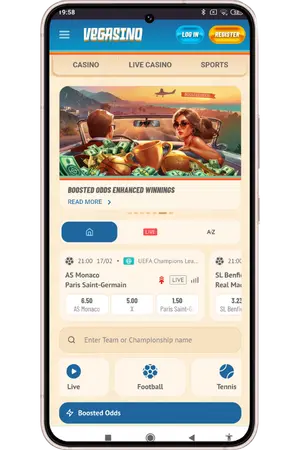
A casino session on mobile is rarely linear. People jump. They sign in, look at the lobby, open a game, back out, check a promotion, revisit the cashier, then return to a recent title. That jumping is normal, so the structure has to support it.
When the layout is built well, the user always knows where they are. Categories stay readable. Recent-play access is easy to reach. Search works without delay. The cashier does not feel isolated from the rest of the account. Small details, yes, but they shape whether the experience feels calm or noisy.
A short evening session shows the difference quickly. A player checks the phone, opens the casino, notices an offer, taps into a slot, leaves after a few spins, then wants to see the balance and maybe set a limit before logging out. That path should not require detective work.
Why Game Browsing Needs More Than A Nice Lobby
A pretty homepage does not solve clutter. On a phone, players usually care more about clean categories, stable thumbnails, fast search, and recent activity than about decorative banners. The better the browsing structure, the less mental effort each session demands.
Cashier, Cards, Wallets, And Request Status
The cashier is where mobile trust gets tested. Games can load beautifully and still leave a weak impression once deposits, pending requests, and payment history feel hard to read. On a desktop, users sometimes tolerate that mess. On a phone, they do not.
Most players want the same small set of things here. They want payment methods that are easy to compare, a visible route to request a withdrawal, a transaction list that makes sense, and clear status updates when something is pending. Hidden information creates tension fast.
This is also the area where people often move too quickly. A player deposits successfully, assumes everything is fully set up, and only later discovers that further checks are needed before money can move out. Nothing has actually gone wrong. The account simply reached a stage where complete details matter more.
Cashier area | What players usually want | Why it matters on mobile |
|---|---|---|
Deposit menu | Fast method selection | Saves time before play starts |
Withdrawal page | Simple request flow | Reduces avoidable mistakes |
Pending activity | Clear status updates | Cuts uncertainty after requests |
Transaction history | Readable money trail | Helps track account movement |
Verification tools | Easy document access | Prevents last-minute scrambling |
Keeping Card And Wallet Details Organised
A player using a card, e-wallet, or another digital payment route usually benefits from one simple habit: keep the account details tidy before a request becomes urgent. That means reading the cashier notes, checking names and account fields, and making sure the profile matches the payment path already in use.
Another quiet advantage comes from reviewing transaction history regularly. Not because every session needs an audit, but because mobile users often move quickly and forget what they changed. A short review of the account section can prevent a lot of confusion later.
Offers, Limits, And Everyday Session Control
Promotions look appealing on mobile until the wording becomes hard to scan. A bonus page packed with dense text may be technically complete, yet still feel unhelpful on a phone. Players usually want the essentials first: what the offer does, what action activates it, where progress can be tracked, and which limits matter before play begins.
The same principle applies to account control. Mobile access makes short, impulsive sessions easier. That is convenient, but it also means responsible-play tools should be easy to locate before they are urgently needed. Deposit limits, cool-off periods, session reminders, and self-exclusion settings are part of normal account management for adult play.
A user may open the casino late in the evening with no intention of staying long. Then a few taps become half an hour. That shift is exactly why session control matters. The best mobile setups do not hide those tools in a remote footer.
Reading Bonus Pages Without Getting Lost
The most useful promo pages break information into workable pieces. A player should be able to see the core offer, understand the qualifying action, and find the main restrictions without scrolling through endless filler. That is not about oversimplifying. It is about respecting how people read on a phone.
Support, Search, And Daily Practical Use
Support becomes important the second something feels unclear. Until then, most people ignore it. That is why mobile support placement matters so much. When help is needed, the user is already frustrated, so the route to chat, email, or account guidance should be obvious and fast.
Search deserves the same attention. It sounds minor, yet it changes everything. A weak one forces users back into endless category browsing, which gets old quickly on a small screen.
Then there is the daily rhythm of use. A mature mobile casino is not judged by one perfect session. It is judged by the fifth or seventh session, when the player knows where most things are and begins noticing whether the platform supports routine use. Does it reopen smoothly? Are recent titles easy to find? Is the account section still clear after a few deposits, a few searches, and a few breaks? That is the level where convenience becomes credibility.
Support, search, and basic session flow all connect to the same idea: mobile users do not want drama. They want direct answers, stable menus, and account tools that behave predictably. The more ordinary the experience feels, the stronger it usually is.

When Browser Play Still Beats Installation
Not every player needs an installed setup. Browser play keeps its own advantages. It is useful for people who switch devices often, those who prefer not to download anything extra, and those who handle more detailed account tasks on a bigger screen anyway.
Browser use can also feel better when someone wants to compare payment notes, read full offer terms, or manage account details alongside email or uploaded documents. A phone handles quick access well. A wider screen can still be easier for slower, detail-heavy tasks.
Many regular users end up with a mixed routine. The phone handles short sessions, quick balance checks, lobby browsing, and fast returns to recent games. Desktop or a larger browser window handles longer reading, payment review, and profile cleanup. That balance feels realistic.